

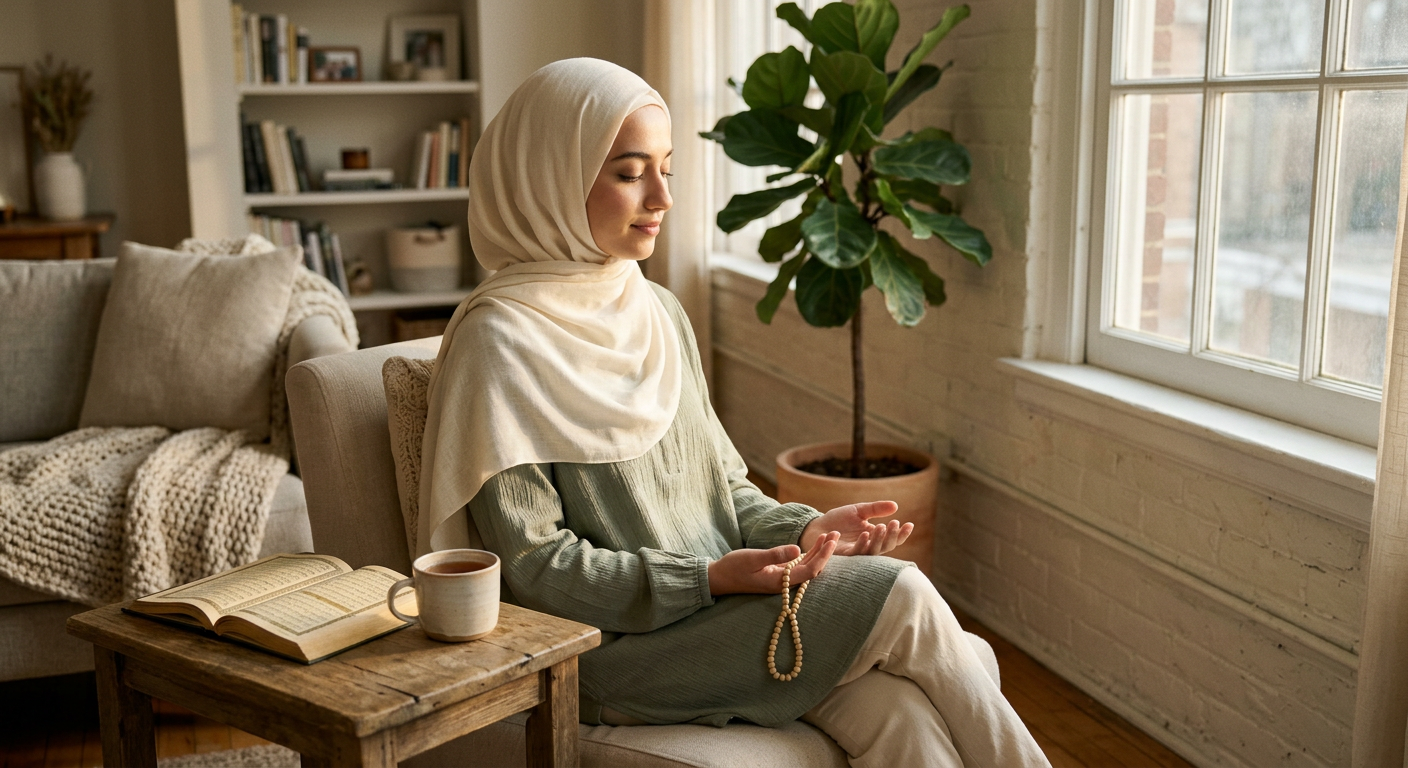
Mental health in Islam is not a modern conversation. It is one that has been unfolding for over 1,400 years. Yet for many in our Muslim communities, talking openly about mental health struggles still feels taboo, shameful, or even spiritually suspect. If you have ever wondered what Islam truly says about the mind, the heart, and the healing process, this post is for you.
The importance of mental health is woven into the fabric of Islamic teachings. Islam does not treat the soul in isolation from the body and mind, it takes a holistic approach to human well-being, one that honors the full complexity of what it means to be a human being. Understanding this is not just academically interesting. For millions of Muslims navigating mental health challenges today, it can be life-changing.
Islam Has Always Taken Mental Health Seriously
Long before the field of clinical psychology existed in the West, Muslim scholars were writing about the human mind, emotional distress, and mental illnesses with remarkable depth. Scholars of the Islamic Golden Age, including Ibn Sina (Avicenna), whose work formed the foundation of medicine for centuries, described conditions we now recognize as depression, anxiety, and psychosis, and advocated for treatment rather than punishment or isolation.
This tradition of care is not a footnote in Islamic history, it is central to it. The great emphasis Islam places on the well-being of the whole person, body and soul, reflects a deep understanding of human nature. The Prophet Muhammad ﴿﴾ himself was deeply attuned to the emotional and mental states of those around him. He comforted, listened, and responded to the mental health needs of his companions with extraordinary compassion.
The Islamic perspective has never been that emotional pain is weakness, or that mental health issues are shameful. Quite the opposite — the Quran and Sunnah are full of acknowledgment of human suffering and guidance for moving through it.
The Prophet Muhammad (ﷺ) and the Year of Sorrow
One of the most profound examples of mental health in Islamic tradition is the story of the Year of Sorrow — ‘Am al-Huzn. In one single year, the Prophet (ﷺ) lost his beloved wife Khadijah (may Allah be pleased with her), the person who was his closest companion and greatest support, and his uncle Abu Talib, who had protected him throughout the years of persecution in Makkah. The grief was so overwhelming that this period is recorded in Islamic history specifically by its emotional weight.
Allah’s Messenger (ﷺ) did not hide his grief. He wept. He mourned. And in response to his emotional struggles, Allah revealed Surah Ad-Duha, a surah of divine reassurance, comfort, and good tidings. ‘Your Lord has not abandoned you, nor is He displeased with you.’ These words were revealed to address the Prophet’s mental state directly. This is not a small thing. This tells us that in the Islamic tradition, feelings of sadness, grief, and heaviness are real, are acknowledged, and are met with divine care.
This is the example of the best of human beings, a man who grieved openly, who was comforted by his Lord, and who continued to serve with strength. The Prophet (ﷺ) is our model not just in worship, but in emotional wellness.
Mental Illness Is Not a Sign of Weak Faith
Perhaps no myth causes more harm in Muslim communities than this one: that mental health difficulties are a sign of weak faith. This idea has no basis in the Quran or the Sunnah, and it has driven countless Muslims away from the professional help they desperately need.
Consider the stories of the prophets. Nabi Yaqub (AS) wept so intensely for his son Yusuf that he lost his sight from grief, and he was a prophet of Allah. Nabi Ayyub (AS) endured years of physical and emotional suffering and is praised in the Quran for his patience. Nabi Yunus (AS) found himself in a place of profound darkness, crying out, ‘There is no god but You, glory be to You, indeed I have been among the wrongdoers.’ These were not people of weak faith, they were among the greatest human beings to have walked this earth.
Mental health struggles — including depression, anxiety, trauma, and mental illnesses — are part of the human experience. They are not punishments. They are not evidence that a person is far from Allah. In fact, for many Muslims, mental health challenges become the very catalyst that deepens their connection to Allah, their daily prayers, and their spiritual practices.
Dr. Rania Awaad, a Muslim psychiatrist and Islamic scholar at Stanford University who specializes in Muslim mental health, has spoken extensively about dismantling this stigma. Her work, along with that of the Yaqeen Institute and other scholars, is helping to reshape how Muslim communities understand mental well-being. As she has noted, seeking treatment for mental health is as valid and necessary as seeking treatment for any physical illness.
What the Quran and Sunnah Say About Emotional Well-Being
The Quran is filled with acknowledgment of human emotional life. It speaks to fear, grief, loneliness, anger, love, hope, and despair, not to dismiss these feelings, but to address them. ‘Verily, in the remembrance of Allah do hearts find rest.’ (Surah Ar-Ra’d, 13:28), this is perhaps one of the most widely quoted ayaat on mental well-being, and for good reason. Regular dhikr (the remembrance of Allah) is described here not just as a spiritual practice but as a source of genuine inner peace.
Surah Al-Baqarah contains some of the most powerful reassurances for those going through difficult times: ‘Allah does not burden a soul beyond that it can bear.’ (2:286). This ayah is not a dismissal of pain. It is a declaration of divine knowledge about each individual’s capacity. For Muslims navigating emotional distress, this is an anchor.
The Sunnah reinforces the validity of negative emotions and the importance of expressing them in healthy ways. The Prophet ﴿﴾ said, recorded in Sahih Bukhari: ‘The eyes shed tears, and the heart grieves, and we will not say except what pleases our Lord.’ He also said in Sahih al-Bukhari that the believer who mixes with people and endures their harm with patience is better than one who does not mix with them, a recognition that human connection and community support are essential, and that engagement with life’s difficulties is a form of strength, not weakness.
Islamic teachings also introduce the concept of husn al-dhann, having a good opinion of others and of Allah. Modern cognitive therapy has echoed this insight: the way we interpret situations and people, and whether we default to charitable or suspicious assumptions, has a measurable impact on our mental state. The sunnah of husn al-dhann is, in many ways, an Islamic framework for cognitive wellness.
Islamic Practices as Powerful Tools for Mental Well-Being
Islam provides a rich collection of spiritual practices that support mental well-being, not as replacements for professional care, but as powerful tools that work alongside it. Research in clinical psychology has increasingly validated what Islamic tradition has taught for centuries.
Daily prayers, the five daily salah, structure the day in a way that provides rhythm, grounding, and consistent moments of connection with Allah. The act of physically bowing and prostrating has been shown to have calming effects on the nervous system. Each salah is a pause in the noise of daily lives, a return to what matters most.
Regular dhikr, whether that is Subhanallah, Alhamdulillah, Allahu Akbar, or the powerful dua ‘O Allah, I seek refuge in You from anxiety and sorrow’ (Allahumma inni a’udhu bika min al-hamm wal-hazan), is a form of spiritual grounding that directly addresses the mental state. The Prophet(ﷺ) taught us specific duas for states of anxiety and grief because he understood that human beings need words to meet their pain.
Acts of worship more broadly, reading Quran, fasting, giving charity, performing acts of kindness, all contribute to a sense of purpose, connection, and meaning. A strong sense of purpose is one of the most consistent protective factors in mental health research. Islam builds this into the architecture of daily life.
Good deeds and acts of kindness are also deeply connected to mental well-being. The Prophet ﴿﴾ said that every act of charity is sadaqah, even a smile, and the research on pro-social behavior and mood is clear: giving consistently improves emotional well-being. This is not coincidence. It is design.
Seeking Professional Help: What Islam Says
One of the most necessary steps any Muslim struggling with mental health challenges can take is to seek professional help, and this is entirely consistent with Islamic values. In fact, it is encouraged.
The Prophet Muhammad (ﷺ) said: ‘Make use of medical treatment, for Allah has not made a disease without appointing a remedy for it, except one disease — old age.’ (Abu Dawud). Muslim scholars have long held that seeking all forms of treatment for illness, including mental illness, is not only permissible but recommended. The use of medical treatment for mental health conditions is not a rejection of tawakkul (reliance on Allah); it is an act of taking the means that Allah has provided.
Today, the field of Islamic psychology is growing rapidly, with Muslim therapists and clinicians trained in both clinical psychology and Islamic theology. Finding a Muslim therapist—one who understands your religious beliefs, your cultural context, and can integrate faith into the healing process—can be enormously beneficial. Organizations like the Institute for Muslim Mental Health and resources from the Yaqeen Institute can help connect muslim patients with culturally competent mental health services.
Clinical treatments, including cognitive therapy, medication where needed, and other evidence-based approaches, are tools, not failures of faith. They are forms of treatment that Allah has made available to us, and using them is an expression of care of our bodies and minds, which are amanah (trusts) given to us by Allah.
If you are a family member supporting someone through mental health difficulties, know that encouraging professional help is one of the most loving things you can do. Removing stigma within your own home is a form of community support that ripples outward.
The Role of Muslim Communities in Mental Health
Muslim communities carry enormous potential to either compound or alleviate mental health struggles for their members. In many Muslim societies, the stigma around mental illnesses remains significant, and this has real consequences. People suffer in silence. They avoid treatment. They carry shame that has no basis in Islamic tradition.
The Prophet (ﷺ) described the believers as being like one body: ‘When one part of the body suffers, the whole body responds with sleeplessness and fever.’ (Sahih al-Bukhari). This is a vision of community support that is active, not passive. It means noticing when a family member or neighbor is struggling. It means creating spaces, support groups, mosque programs, online communities, where mental health struggles can be named without shame.
Religious leaders in the Muslim community have a particularly important role to play. When imams and scholars speak openly about mental health from the minbar, when they affirm that emotional struggles do not make you less of a Muslim, and when they point people toward professional help alongside spiritual guidance, lives are saved. This is dawah in the deepest sense — a demonstration that Islam embraces the full reality of being human.
Muslim communities are also uniquely positioned to hold space for grief, loss of wealth, relationship difficulties, and the ordinary hard moments of human life in ways that Western psychology cannot always offer. The concept of being held by the ummah, by a believing community, is itself a form of support system that has been shown to positively affect mental well-being.
Practical Steps for Better Mental Health as a Muslim
Here are practical steps rooted in both Islamic tradition and current understanding of mental well-being that you can take in your daily life:
- Protect your salah. Daily prayers are not just obligations — they are anchors. Even in your hardest seasons, hold on to them.
- Build a regular dhikr practice. Start small — even ten minutes of remembrance of Allah after Fajr can shift your mental state over time.
- Recite Surah Al-Baqarah regularly. The Prophet (ﷺ) said it drives away Shaytan, and its verses address the full spectrum of human emotional struggle.
- Learn the duas for anxiety and distress. The Prophet (ﷺ) gave us specific supplications for mental struggles, learn them and keep them close.
- Seek professional help without shame. Contact a Muslim therapist or a mental health professional who understands your Islamic context. This is a necessary step, not a last resort.
- Connect with your community. Isolation worsens mental health challenges. Find a support group, attend your masjid, and reach out to a trusted friend or religious leader.
- Practice husn al-dhann — good opinion of Allah. When life feels heavy, actively choose to believe that Allah knows your pain, sees your effort, and has good planned for you.
- Tend to your physical health. Sleep, movement, nutrition, and time in nature all directly affect mental well-being. Caring for your body is caring for your amanah.
You Are Not Alone — And Islam Has Always Known That
If you are navigating mental health challenges right now, know this: Islam has always seen you. Every prophet who grieved, every companion who struggled, every scholar who wrote about the depths of emotional pain — they are all part of a tradition that says your inner life matters.
The ultimate happiness Islam points us toward — falah, the deep flourishing of the soul — is not the absence of struggle. It is the presence of Allah in the midst of it. It is the sense of purpose that comes from knowing why you are here. It is the healing process, however long it takes, walked with faith, community, and the best professional help available to you.
Mental health in Islam is not a contradiction in terms. It is a conversation our tradition has been having since the beginning. It is time for our communities to have it openly, with compassion, without shame, and with the full understanding that seeking mental health support is one of the most courageous and Islamic things a person can do.
May Allah grant us all mental well-being, ease our emotional struggles, surround us with community support, and guide us to the practical solutions and professional help that our mental health needs. Ameen.
Resources
If you are looking for more on Muslim mental health from an Islamic perspective, the Yaqeen Institute has an excellent collection of research and articles. Dr. Rania Awaad’s work at Stanford on Islamic psychology and clinical psychology integration is also highly recommended. For mental health services, look for therapists trained in both Western psychology and the Islamic context, or reach out to Muslim mental health organizations in your area.